This turn of phrase is both literal and strangely accurate in the wider realisation of what dawned on me the morning after a non-eventful five-a-side football match back in December 2012.
I have always been a keen sporting fellow and, with hindsight, rather fortunate to escape many of the afflictions that tend to get bundled into the phrase “weak core”. So that morning after the sporting night before, I had a sinking feeling that all was not right downstairs.
As a musculoskeletal physiotherapist working in Manchester city centre, I was used to seeing a wide variety of physical mishaps. I was therefore well placed to hope that my initial fear of a hernia would not materialise. My gut feeling, however, was literally not a good one.
The First Clues
Crouching and squatting were the biggest indicators that all was not well. Coughing was a bit tender after exercise and there was palpable soreness in the lower left side of my abdomen, below and inside the knobbly bit at the front of the pelvis.
I hoped that a few lower abdominal fibres had perhaps been asked a little too much of during the football. But what threw me was that at the lowest point of a crouch, those muscles are not really doing very much. Yet that was the exact point where it felt most wrong.
What Was Actually Going On
In simple terms, pressure inside the abdominal cavity pushes downwards. If there is any thinning, strain, or small weakness in the muscular wall, that pressure can irritate the area and in some cases allow tissue to press into a small window-like gap. Some people have a weakness that causes discomfort without a visible bulge. Others have a larger defect that can create a bulge you can feel or even see.
The frustrating part is that the smaller, less obvious version can be the more painful one. The sportsman’s hernia, or athletic pubalgia as it is often labelled, tends to sit in that awkward zone. Not dramatic enough to be obvious. Painful enough to ruin your week.
What I Could and Couldn’t Do
Running and kicking sports were a firm no. You can rest away from the aggravating forces, but the problem does not always simply disappear. There is some support for reinforcing the trunk and improving strength around the hips and pelvis to protect vulnerable tissue, but for me, modifying life to not run or kick things was not an option.
Cycling was fine. Golf smarted a little but was mostly tolerable. Social cricket was acceptable, mainly due to a lack of running and, if I am honest, a lack of form.
The GP Visit and The Tests
A few weeks passed with little change, so I reluctantly took myself to the GP for onward referral. An ultrasound scan was suggested to look for an offending bulge and confirm diagnosis. The additional two student doctors who also wanted to take a look was not ideal. But I would have to get used to this.
The scan showed some additional “activity” in the area but no clear hole or bulge was evident. Which, as it turns out, is not unusual. These injuries can be elusive when you expect the problem to present neatly on a screen.
The Specialist Opinion
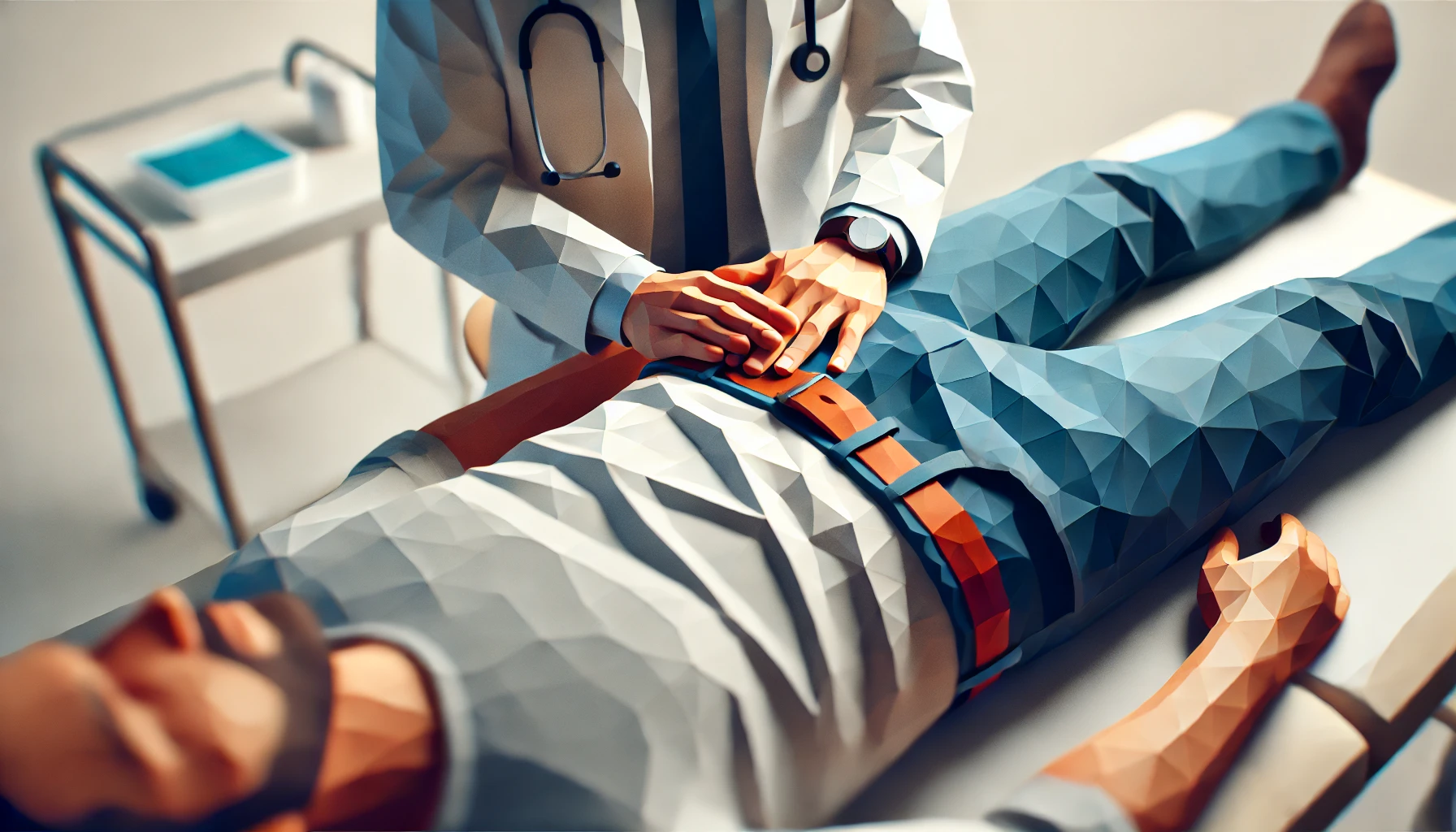
I sought the opinion of a well respected, recently retired general surgeon. He was not a fan of ultrasound for this situation and preferred a more practical, chair-based test. The idea was simple. Can you try to lift yourself off the chair using your arms only. With a sportsman’s hernia, this tends to hurt.
A more objective test involved attempting to locate the weakness by examining what I had not previously heard described as my “external ring”. This sits slightly lower than the painful spot but is easily found with clear direction. In short, I had a hole on the painful side and a smaller one on the other, currently non-painful, side. His advice was to fix both while you are there, as the other side often follows once you return to sport. Great.
Surgery and The Waiting Game
With the scan, the exam findings, and increasingly limited sporting patience, I was referred to a consultant surgeon. We discussed whether to operate on both sides at once. He performed open surgery using a mesh to reinforce the weak area. The outer wound would be glued rather than stitched.
As a non-urgent NHS operation, the waiting time was correspondingly long. Dates moved around and were postponed until the day finally arrived, around eight months after the initial injury.
Recovery, In Real Terms
The operation was a day case. I was first on the list and home just after lunch. One of the requirements before discharge was proving everything was functioning by passing urine. When everything is anaesthetised, this is not as straightforward as you might expect.
Recovery was quicker than you might think, considering both sides of the lower abdominal wall had been opened. After walking for a few days like I had taken a free kick to the midriff, I was back on the bike at seven days. Light interval walk and jog at three weeks. Running properly at six weeks.
The first few days needed pain relief and anti-inflammatories to stay comfortable and sleep. That part is worth saying out loud, because “quick recovery” still includes a short period where you feel distinctly sorry for yourself.
Rebuilding the Weak Links
Post-surgery, the strength deficits do not magically vanish. If anything, the lower abdominal and pelvic control work becomes even more important. I enrolled in a reformer Pilates class around four weeks after the operation.
Those medieval torture-looking contraptions are brilliant for isolating what needs to work, and with the right supervision they are a very effective way of rebuilding strength and control without rushing back into impact.
Returning To Football
Football returned to the agenda about three months post-op once running had reached a comfortable 10km and zig zags, sprints, and changes of direction felt solid again. It was a relief to wake up the next day without that nagging groin ache.
The rest of me, however, was not quite so at ease. As with most returns to sport, the injury may be fixed, but the fitness reality check arrives with enthusiasm.
Where I Landed
To date, I am not restricted by what I can or cannot do. The scars needed a little scar tissue work to keep layers moving well. I can feel the mesh in certain compressive yoga poses, but otherwise the operation has been a success.
When You Should Get Checked
If you have persistent groin pain that returns when you sprint, kick, change direction, or cough after sport, do not ignore it. A GP assessment can help rule out a true inguinal hernia and other causes of groin pain, then arrange investigations or referrals if needed.
Seek urgent help if you develop sudden severe groin or abdominal pain, a new painful lump, nausea and vomiting, fever, or rapidly worsening symptoms.
How Doctorcall Can Help
If groin pain is stopping you from training, or you are worried about a possible hernia, a GP assessment is a sensible next step. A doctor can examine you, discuss what is most likely, and arrange referrals and investigations where needed.
This article is for general information and does not replace medical advice. If symptoms are new, severe, or getting worse, seek medical care promptly.