
January starts with such good intentions.
A fancy new diary. New running shoes. A new water bottle on the kitchen counter, next to a packed gym bag.
Then, real life turns up.
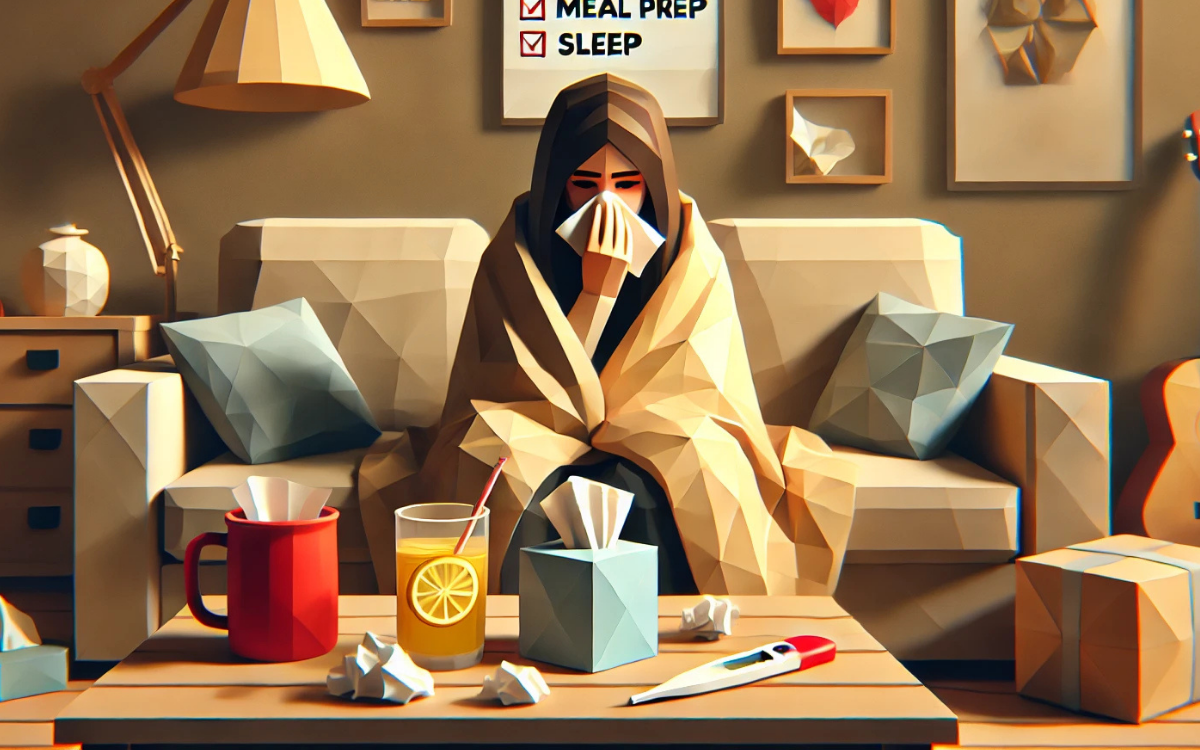
It rains for a week. Snow covers the driveway. The school run starts again and, before you know it, someone in the house is coughing. Suddenly your “new routine” is just you standing in the kitchen, wondering how you are out of tissues already.
When people abandon health resolutions, it is rarely because they do not care, or because they are lazy. It is because the resolution comes with too much friction. The waiting. The travel. The time they simply do not have. The effort of finding an appointment, getting there, sitting there, then doing it all over again.
So the plan becomes, “I will do it next week”. Next week becomes February. Then the year rolls on, and those Christmas trees are back in the shop windows before you have even restarted.
That is why a practical health plan often beats a perfect routine. You are not trying to become a different person overnight. You are trying to make it easier to follow through, especially when January is doing what January does.
The Gap Between New Year’s Plans and Follow-Through
A YouGov survey of 2,076 adults in Great Britain, carried out on 14 and 15 December 2025, offers a useful snapshot of how people feel about resolutions going into 2026, right before the “new year, new me” energy properly kicks in.
The headline is simple. Most people are not promising themselves a complete reset. Only 19% say they plan to make New Year’s resolutions for 2026, while 66% say they will not. That is not a lack of ambition. It is often experience. Many people know January is a hard month to overhaul routines.
When people do make resolutions, health still rises to the top. Among those planning resolutions for 2026, 23% say they want to get fit or exercise more. Others mention losing weight at 17%, eating more healthily at 11%, and a general focus on better health at 10%.
It is easy to see why these goals appeal. People want to feel better and stay well. The challenge is what happens next. Winter bugs, busy diaries, travel time and long waits have a way of squeezing out the best intentions.
That is where friction shows up.
The drop-off is usually not laziness. It is the waiting. The travel. The time off work. The uncertainty about whether something is worth checking. Too many small hurdles, and the plan quietly turns into, “I’ll do it next week.”
What Friction Looks Like When You’re Trying to Keep a Health Resolution
Friction is anything that makes the next step feel like a hassle. It is rarely one big obstacle. It is lots of small ones that add up, especially in January when time and energy already feel stretched.
It often starts with something simple. A symptom that has been hanging around. A niggle that keeps coming back. A tiredness that does not match what you have been doing. You tell yourself you will get it checked, but the steps between the intention and the appointment feel like work.
It can look like this.
• You want to get a lingering symptom checked, but booking feels like a project
• You do not feel well enough to travel, so you delay
• You are not sure if something is worth worrying about, so you wait
• You cannot face a waiting room when you are already run down
• You plan to rest properly, but you still need to keep life moving
This is the part people rarely talk about. It is not that they do not want to look after themselves. It is that the process feels heavy, and it is easy to keep putting it off when there is always something more urgent.
Each delay makes the next delay easier. Eventually the resolution becomes something you used to be doing, and the “new year” feeling quietly fades out.
Habits Take Longer Than Most People Expect
One reason health resolutions fade in January is that many people expect the new behaviour to feel natural quite quickly. Most of the time, it does not. For a while, it still takes effort, planning and a bit of pushing past inconvenience.
Research on habit formation suggests that automaticity builds gradually through repeated behaviour in a stable context, then levels off over time. In a well-known study tracking everyday habits, the median time to reach around 95% of the habit’s eventual automaticity was 66 days, with a wide range from 18 to 254 days depending on the person and the behaviour.
Read the study here.
This matters in January because it makes the early stage feel more normal. A few weeks in, it can still feel like work. That does not mean it is failing. It also helps to know that perfection is not required. A British Journal of General Practice review, discussing this research, notes that missing an occasional day did not measurably affect habit formation in that study.
Read the review here.
The goal is to keep the behaviour going often enough that it has a chance to settle in. The risk point is usually when the next step starts to feel like too much effort, so it stops altogether.
Why January Makes Everything Harder
January adds extra friction because the environment is working against you. Even simple healthy choices can feel harder to follow through on when it is cold, dark, and everyone is getting back into routine at once.
• Cold weather makes it harder to get out the door
• Seasonal bugs are common
• Energy can feel lower after the holiday season in December
• The return to routine makes time feel tighter
The NHS also emphasises practical winter wellbeing steps, including staying up to date with vaccinations for those eligible and taking sensible measures to reduce the risk of illness through the colder months.
Read the NHS guidance here.
So if your resolution relies on perfect conditions, January will test it. A more realistic plan is one that still works when the weather turns, routines get busy, or you simply feel under the weather.
A Better Approach To Keeping Health Resolutions This Year
If you want a health resolution that lasts, make the next step easier to do, even on a bad day.
Most plans fail when they rely on perfect conditions. A stronger plan keeps working when you are tired, busy, unwell or simply fed up.
Here are four moves that make a real difference.
1. Make The Action Smaller
Instead of “get healthy”, choose one clear action you can repeat without much negotiation.
Good examples
• A ten-minute walk after lunch
• A consistent bedtime, even if it is not perfect
• A simple breakfast you can do on autopilot
• A quick check-in for a symptom you have been ignoring
Small actions are easier to repeat and repetition is what gives a habit time to take root.
2. Make It Closer
If a healthy choice requires travel, time off work or complicated planning, it is more likely to be postponed.
A helpful question is, what can be done at home or near home
• A short walk on your street
• A stretch while the kettle boils
• A plan you can follow without needing to be somewhere specific
3. Make It Clearer
Uncertainty creates avoidance. If you are not sure whether something is worth checking, it is easy to wait too long, feel worse, then drop the rest of your routine as well.
Clarity helps because it removes the mental back-and-forth. One evidence-based tool is the “if-then” plan, also known as an implementation intention. Research reviews and meta-analyses have found that forming specific if-then plans improves the chances of following through on goals.
Read more here.
Examples
• If it is 9pm, then I start my wind-down routine
• If I wake up tired three days in a row, then I book a check-in
• If a symptom lasts longer than expected, then I stop guessing and speak to a clinician
4. Make It Resilient
Plan for setbacks. Winter bugs, tired weeks, work deadlines, family life. These are not exceptions. They are the year.
Resilience means having a backup version of the plan for low-energy days
• A shorter walk instead of no walk
• A simpler meal instead of abandoning the day
• A rest day that is planned, not framed as failure
The New Year’s Resolution You Can Actually Keep
If you want to set one resolution for the year, make it a practical one.
That is where Doctorcall Concierge Membership fits naturally. It works as a resolution because it reduces friction, the waiting, the travel, the effort, and the “I’ll do it next week” delay that so often gets in the way.
With membership, the support is designed to fit around real life.
• You do not have to go anywhere
• You can have a GP visit you at home, 24/7
• You can also use phone consultation and video consultation wherever you are
• You have GP support on standby for you, with family add-ons available
This does not replace your other health goals. It makes them easier to keep.
If you pick up a winter bug in January, you can get advice early and recover properly, rather than pushing through and falling further behind. If something has been lingering for weeks, you can stop guessing and get a clear plan. If stress or poor sleep is starting to show up in your body, you can speak to a GP without having to rearrange your week.
That is what makes it easier to keep going. Your health plan does not depend on perfect motivation, perfect weather, or perfect timing.
A Simple January Checklist
If you want something useful to save, start here.
• If something has been lingering, stop waiting for it to disappear on its own
• If you are repeatedly run down, look for a cause rather than blaming willpower
• If sleep problems are dragging on, get advice instead of pushing through
• If you keep postponing a health concern, take that as your sign to act
• If you get ill, let recovery be part of the plan, not a detour from it
The Bottom Line
Health resolutions tend to fall apart when they ask for too much effort, too soon, in the hardest month of the year. They last when the next step is easy, clear, and close to home.
If you want Doctorcall Concierge Membership to be your New Year’s resolution, it is a practical one. It is easy to keep, because you do not have to go anywhere. We come to you.
Doctorcall Concierge Membership gives you 24/7 access to private GPs, including home visits, phone and video consultations, without the waiting or travel.