

A Simple Planning Timeline For Workplace Vaccination
A clear timeline can make workplace flu vaccination programmes easier to manage from start to finish. Planning in stages helps secure preferred clinic dates, align internal teams and avoid last-minute pressure.
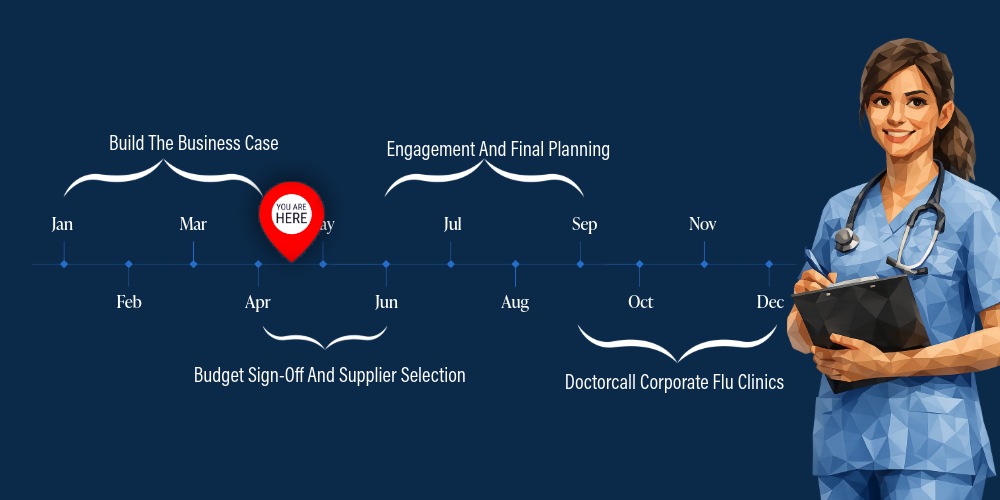
This timeline shows a simple way to approach planning across the year. If you are planning now in April, you are in a strong position to secure dates before the busiest period begins.
Why Early Planning Matters
Starting early gives you more flexibility. It allows time to define what your organisation needs, choose the right delivery model and secure clinic availability before demand increases.
It also makes internal communication more effective. When employees are given clear information early, uptake tends to improve and the overall programme runs more smoothly.
January To April: Build The Business Case
This stage focuses on defining your objectives and scope. Many employers use this period to confirm goals such as reducing absence, maintaining continuity and supporting employee wellbeing.
It is also the right time to review your workforce structure, including locations, shift patterns and any priority groups. Initial decisions around delivery methods can begin here, including whether on-site clinics, vouchers or a mixed approach will work best.
April To June: Budget Sign-Off And Supplier Selection
This is where planning becomes more concrete. Budgets are agreed, providers are selected and key service details are confirmed.
Employers typically finalise vaccine options, booking processes and reporting requirements at this stage. Securing clinic dates early can make a noticeable difference, especially for organisations with multiple sites or larger teams.
June To September: Engagement And Final Planning
With the structure in place, focus shifts to employee engagement and operational planning. Clear communication during this stage helps employees understand the value of vaccination and how to take part.
Final details such as clinic spaces, logistics, privacy arrangements and staff numbers should be confirmed. This preparation helps ensure clinics run efficiently when they begin.
One Month Before Clinics: Execution Readiness
In the final weeks, the focus is on readiness. Booking links are shared, reminders are sent and internal teams are briefed.
Employers should also confirm staffing, escalation processes and contingency plans to ensure everything runs smoothly on the day.
During Clinics: Delivery And Monitoring
During the clinic period, it is useful to monitor uptake and adjust where needed. Small changes in communication or access can improve participation.
Capturing basic feedback and attendance data during this stage can support future planning.
After Clinics: Review And Plan Ahead
Once clinics are complete, a short review helps capture what worked well and what could be improved. This can include uptake levels, operational feedback and key learnings.
Employers who plan ahead at this stage are often better placed to secure preferred clinic dates for the next season.
Planning ahead with Doctorcall makes the process straightforward from start to finish. From securing preferred clinic dates to delivering on-site sessions or voucher options, everything is handled with care and efficiency. Booking early helps you stay in control and ensures your team has access to protection when it matters most.